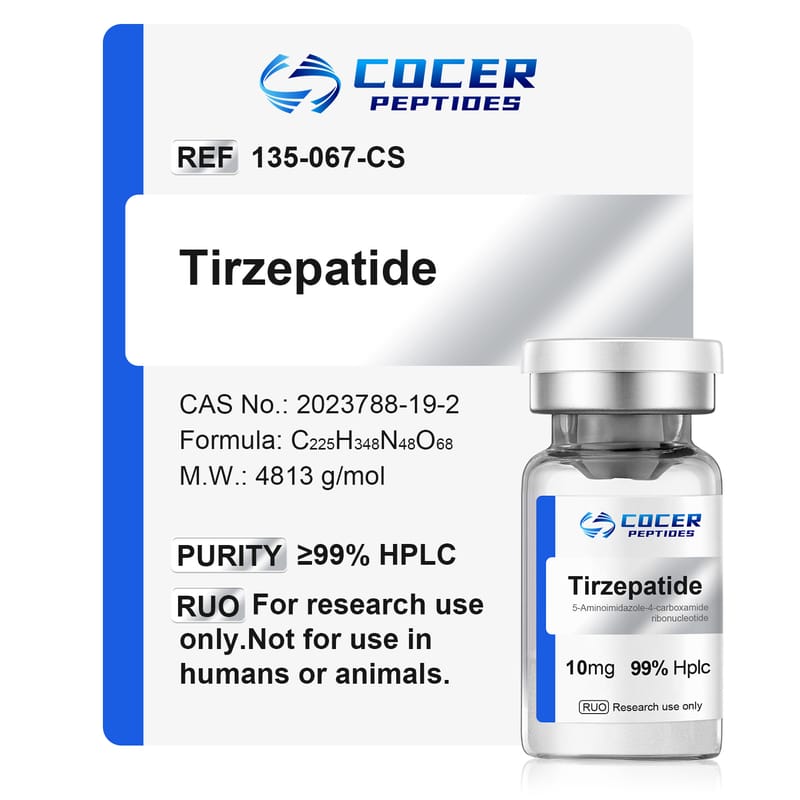
Tirzepatid 10mg
Tirzepatid, a synthetic peptide, works by activating GLP-1 and GIP receptors to modulate blood glucose, boost insulin secretion, inhibit glucagon release, and improve insulin sensitivity. It further slows gastric emptying, enhances satiety, curbs food intake, reduces weight, raises adiponectin levels, and optimizes lipid metabolism. Studies indicate it outperforms single GLP-1 agonists in HbA1c reduction and weight loss, with positive effects on blood pressure and lipids, as well as potential cardiovascular benefits, making it a novel therapy for type 2 diabetes and obesity.
The peptide will be provided as lyophilized powder to ensure maximum stability.
$55.00
Tirzepatid Overview
Tirzepatid is a synthetic polypeptide drug and the first dual agonist of glucagon-like peptide-1 (GLP-1) and glucose-dependent insulinotropic polypeptide (GIP) receptors. This drug can regulate blood glucose levels. Specifically, activating the glucagon-like peptide-1 receptor can promote insulin secretion and inhibit the release of glucagon; while activating the glucose-dependent insulinotropic polypeptide receptor can enhance insulin sensitivity and secretion ability.
In addition to regulating blood glucose, it can also delay the process of gastric emptying, increase satiety, thereby reducing food intake and facilitating weight loss. Moreover, it can increase the level of adiponectin, thus improving insulin sensitivity and lipid metabolism.
The results of clinical trials show that in terms of blood glucose control, Tirzepatid has a better effect compared with single glucagon-like peptide-1 agonists and can significantly reduce the level of glycated hemoglobin (HbA1c). It also has a remarkable effect on weight loss, with an average weight loss of more than 20%, so it can also be used for the treatment of obesity.
The once-weekly injection regimen improves patients’ medication compliance, and it has relatively few side effects. At the same time, it also has a positive impact on blood pressure and blood lipid conditions, demonstrating potential cardioprotective effects.
What is the research background of Tirzepatid?
Tirzepatid is a synthetic polypeptide drug. Its research and development stem from a deep understanding of the limitations of existing GLP-1 receptor agonists in the treatment of type 2 diabetes and obesity at that time. Although GLP-1 receptor agonists have shown excellent performance in blood glucose control and weight loss, scientists found that their activation of the GIP receptor is relatively weak, which limits the efficacy of the drugs to a certain extent. Therefore, the research and development team was committed to developing a new drug that can activate both the GIPR and GLP-1R simultaneously to achieve more comprehensive and effective blood glucose control and weight management[1].
During the research and development process of Tirzepatid, scientists carried out a large number of basic research and clinical trials. In the preclinical research stage, animal experiments were used to thoroughly evaluate the pharmacodynamic properties of Tirzepatid. The results confirmed its potential in blood glucose control and weight loss, laying the foundation for subsequent clinical trials. Subsequently, Tirzepatid entered the clinical trial stage, including phases I, II, and III. Phase I mainly evaluated the safety, tolerability, and pharmacokinetic properties of the drug, and the results showed good safety and tolerability. Phase II further explored the efficacy and safety of different doses in patients with type 2 diabetes, preliminarily determining the effective dose range. The key phase III clinical trials, such as the SURPASS series of studies, involved a large number of patients with type 2 diabetes. The results showed that Tirzepatid was significantly superior to existing GLP-1 receptor agonists, such as Semaglutid, in reducing blood glucose and weight, providing strong evidence for the marketing application[1].
Tirzepatid is a polypeptide composed of 39 amino acids, and its structure has been modified to improve its stability and pharmacodynamics. Its unique structural design enables it to integrate the effects of two incretins, GIP and GLP-1, into a single molecule, activating the hormone receptors involved in blood glucose control through a dual mechanism. Specifically, on the one hand, it acts on the pancreas to promote insulin secretion and inhibit glucagon release to lower blood glucose; on the other hand, it acts on the central nervous system, delaying gastric emptying, increasing satiety, reducing appetite and food intake, and achieving weight management. This dual mechanism gives Tirzepatid unique advantages in the treatment of type 2 diabetes and obesity, providing patients with a more comprehensive treatment option[1].
Tirzepatid Structure
1-Tirzepatide
Source: PubChem
Sequence: Tyr-{Aib}-Glu-Gly-Thr-Phe-Thr-Ser-Asp-Tyr-Ser-Ile-{Aib}-Leu-Asp-Lys-Ile-Ala-Gln-{diacid-C20-gamma-Glu-(AEEA)2-Lys}-Ala-Phe-Val-Gln-Trp-Leu-Ile-Ala-Gly-Gly-Pro-Ser-Ser-Gly-Ala-Pro-Pro-Pro-Ser-NH2
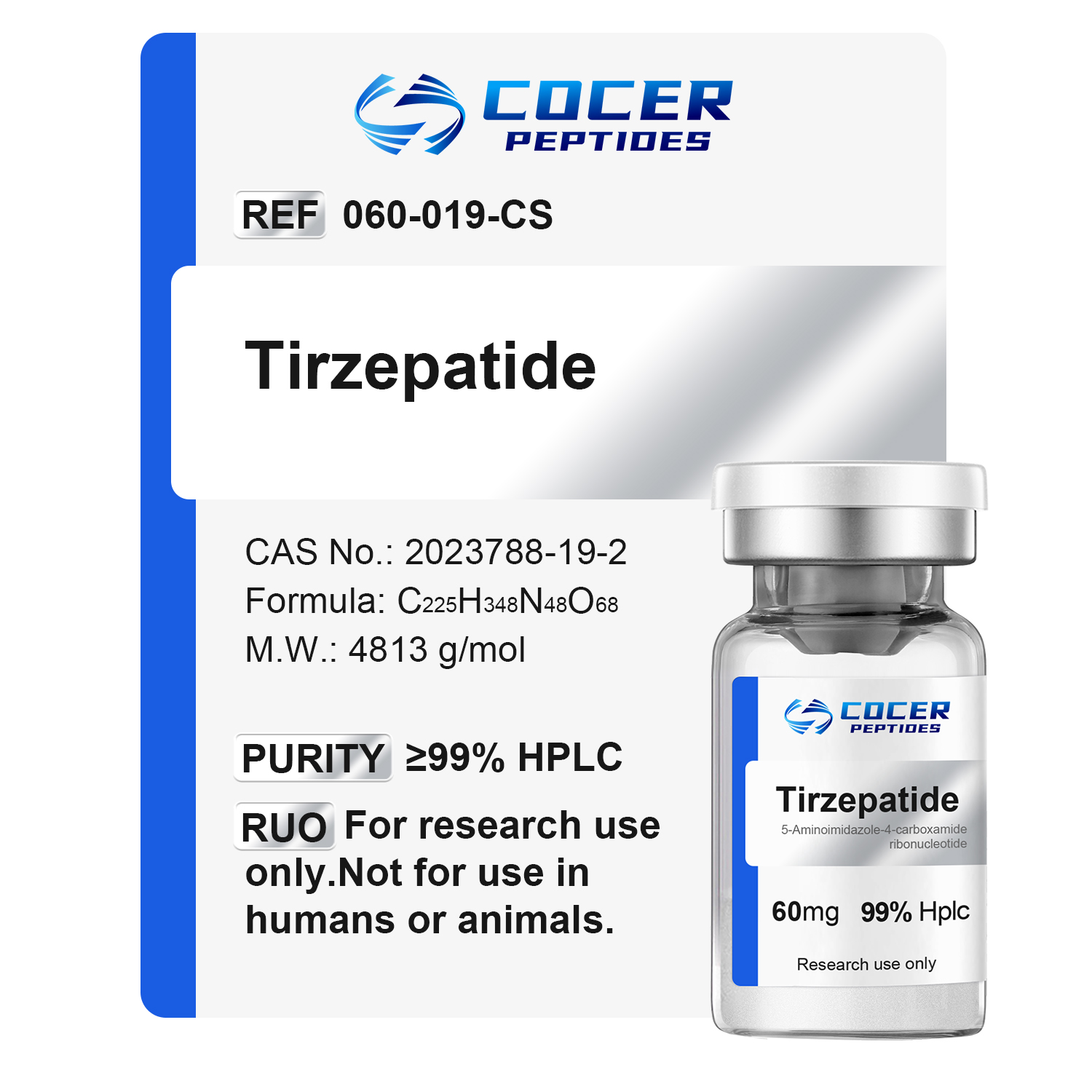
Molecular Formula: C225H348N48O68
Molecular Weight: 4813 g/mol
CAS Number: 2023788-19-2
PubChem CID: 163285897
Synonyms: Zepbound; Mounjaro
What is the mechanism of action of Tirzepatid?
Tirzepatid lowers blood glucose through the following multiple mechanisms:
Activation of GLP-1 Receptors: Tirzepatid binds to the GLP-1 receptors on pancreatic beta cells, mimicking the action of natural GLP-1. GLP-1 is a hormone produced by the intestine that is crucial for maintaining glucose homeostasis. It can promote insulin synthesis, secretion, and glucose sensing, and reduce glucagon secretion to promote satiety and suppress appetite. In patients with type 2 diabetes, insufficient insulin secretion or reduced cellular sensitivity to insulin leads to elevated blood glucose. Tirzepatid increases insulin secretion by activating GLP-1 receptors, improving blood glucose control. At the same time, the activation of GLP-1 receptors can also inhibit the release of glucagon, further reducing the sources of blood glucose and contributing to blood glucose control [2].
Activation of GIP Receptors: Tirzepatid acts on GIP receptors, and its activation can enhance insulin sensitivity and secretion. GIP receptors are mainly present in tissues such as pancreatic beta cells. After activation, through intracellular signal pathway transduction, insulin secretion is increased, and the cell’s responsiveness to insulin is enhanced, reducing blood glucose more effectively[2]. This dual receptor agonist effect makes Tirzepatid more effective than single GLP-1 receptor agonists in promoting insulin secretion and inhibiting glucagon release [2].
Delaying Gastric Emptying and Increasing Satiety: Tirzepatid can delay gastric emptying, prolonging the residence time of food in the stomach, slowing down the absorption rate of nutrients, and preventing a sharp rise in postprandial blood glucose. Its effect on gastric emptying is comparable to that of GLP-1 receptor agonists. At the same time, it acts on the central nervous system, increasing satiety, reducing appetite and food intake, which is especially suitable for the obesity problem often accompanied by patients with type 2 diabetes, helping to improve insulin resistance and the overall metabolic condition[2].
Improving Insulin Sensitivity and Lipid Metabolism: Tirzepatid can increase the level of adiponectin, an adipocytokine related to insulin sensitivity, helping to improve insulin sensitivity, enabling cells to more effectively uptake and utilize glucose, and reducing blood glucose (Anonymous, 2023). In addition, it can also improve the lipid profile, having a potential protective effect on cardiovascular health. It has been proven to be able to improve blood pressure, reduce LDL cholesterol and triglycerides[3].
WhatsApp us